
Understanding Fault When You Fall at an Albuquerque Grocery Store
Key Takeaways: Liability for a grocery store slip and fall in Albuquerque rests with the property owner when they knew, or should have known, about a hazard and failed to fix it or warn customers. New Mexico law requires stores to exercise reasonable care, not guarantee safety, so a fall alone does not prove negligence. Proving your claim hinges on notice, hazard duration, and reasonable inspection. Under New Mexico’s pure comparative negligence system, you can recover even if partly at fault, with your award reduced by your fault percentage. A three-year statute of limitations generally applies under Section 37-1-8 NMSA 1978, though shorter deadlines may apply for government entity claims. Because outcomes are fact-dependent and evidence fades quickly, acting promptly is essential.
Liability for a grocery store slip and fall in Albuquerque falls on the property owner when they knew, or should have known, about a hazard and failed to fix it or warn customers. Under New Mexico law, a store must exercise reasonable care to keep premises safe but is not an automatic guarantor of safety. Proving responsibility depends on what caused the fall, how long the danger existed, and whether the store acted reasonably.
If you or a loved one was hurt while shopping, the team at Smith & Marjanovic Law is ready to help you understand your options. Call us today at (505) 510-4440 or reach out through our online case review request to discuss what happened.
The Core Liability Standard for New Mexico Premises Liability
New Mexico holds property owners to a duty of reasonable care rather than a duty to guarantee safety. The proprietor of a store is not an insurer against accidents to customers but is bound only to exercise reasonable care to keep premises safe. This foundational principle from the New Mexico Supreme Court guides how courts evaluate grocery store slip and fall New Mexico cases today.
This standard has been reaffirmed repeatedly across decades of New Mexico case law. Courts have noted that a store owner is not the insurer or guarantor of customer safety, citing decisions such as Hallett v. Furr’s, Inc. For an injured shopper, the question is not simply whether you fell, but whether the store behaved unreasonably under the circumstances. You can read the full New Mexico Supreme Court ruling in De Baca v. Kahn for the doctrinal background.
💡 Pro Tip: Photograph the hazard, your injuries, and the surrounding area immediately after a fall. Evidence of how long a spill sat on the floor can be difficult to recover later.
Proving Notice: When the Store Should Have Known
A central question in premises liability Albuquerque cases is whether the store had notice of the danger. New Mexico law recognizes that a store is only required to make a reasonable inspection of premises and owes patrons ordinary or reasonable care. A store is not expected to conduct a minute, foot-by-foot inspection, so establishing constructive notice often turns on how long a hazard existed before your fall.
New Mexico also requires that owners either warn or remedy foreseeable dangers. Quoting Mahoney v. J.C. Penney Company, the standard is that the inviter do what a reasonably prudent person would do under the circumstances, either to warn invitees of any known or foreseeable danger, or to keep premises reasonably safe absent such warning. A wet floor left unmarked for an extended period may support a claim, while a spill that occurred seconds before your fall may not.
Importantly, the fall itself does not prove negligence. New Mexico courts have made clear that the mere fact an invitee falls on a store floor does not raise a presumption of negligence. To recover, you must show the store breached a duty of care and this breach caused your injury. Understanding exactly what must be proven in a slip-and-fall lawsuit in New Mexico can help you evaluate whether claim elements are present.
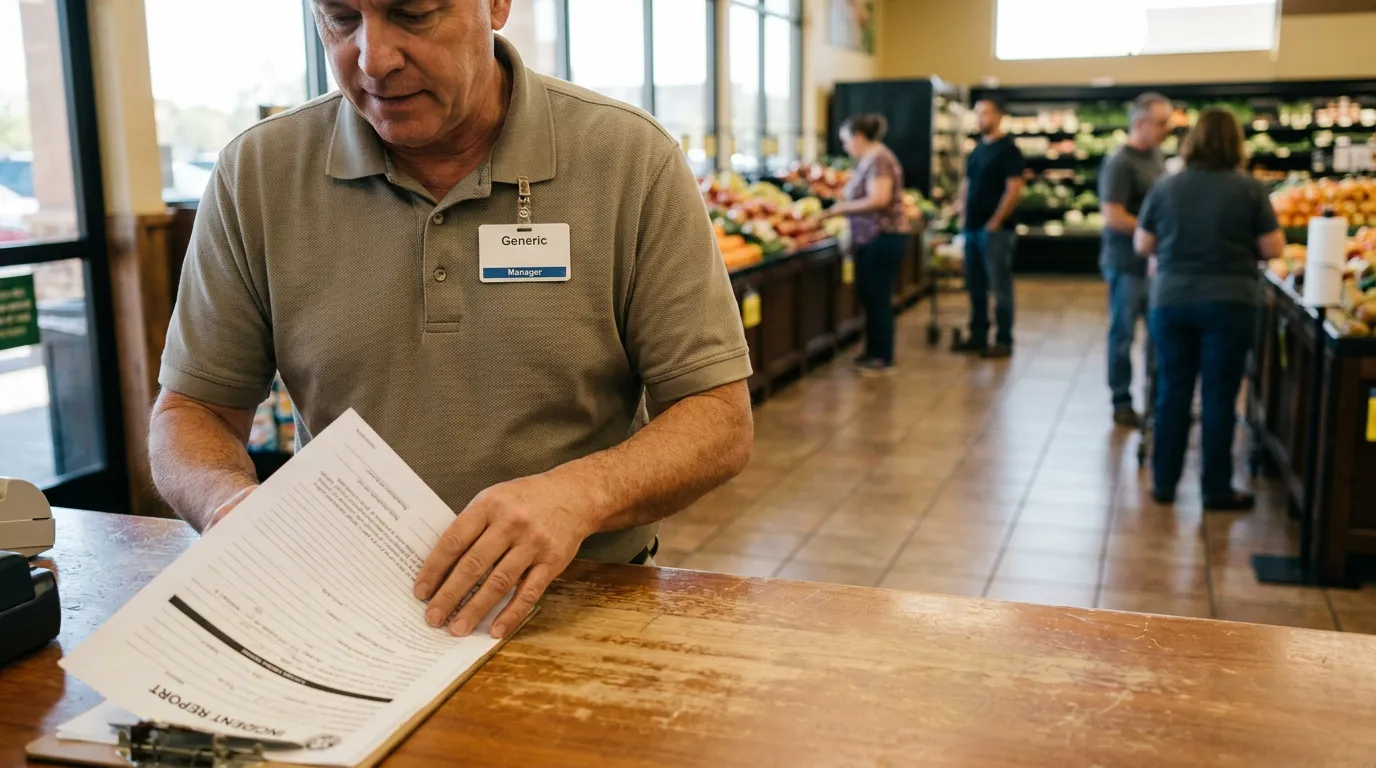
💡 Pro Tip: Ask a store manager whether an incident report was completed, and request a copy. Written documentation created at the scene can become valuable evidence.
How Comparative Fault Affects Who Is Liable in a Slip and Fall
New Mexico follows a pure comparative negligence system, which shapes nearly every slip and fall Albuquerque case. Under this framework, an injured shopper can still recover damages even when partially at fault, with recovery reduced by the assigned fault percentage. A grocery store cannot fully escape responsibility just because a customer bears some blame.
A short example illustrates how the reduction works in practice. If your total damages are $80,000 and you are found 35% at fault, you would recover $52,000. Even a shopper found 75% at fault may recover 25% of total damages, distinguishing New Mexico from states that bar recovery above a certain fault threshold.
| Fault Assigned to Shopper | Total Damages | Approximate Recovery |
|---|---|---|
| 35% | $80,000 | $52,000 |
| 50% | $80,000 | $40,000 |
| 75% | $80,000 | $20,000 |
Because fault percentages are fact-dependent, outcomes vary widely. Insurers frequently argue that a shopper wore improper footwear, ignored a warning sign, or was distracted. How courts and juries weigh these arguments depends on specific evidence.
The Deadline That Governs Your Slip and Fall Lawsuit New Mexico Claim
New Mexico sets a three-year statute of limitations for personal injury claims, and missing it can permanently end your case. Under Section 37-1-8 NMSA 1978, the three-year personal injury limitation applies when the essence of a claim is in tort for personal injury, including grocery store negligence cases. You can review the statutory text of Section 37-1-8 NMSA 1978 directly.
The clock generally begins when the cause of action accrues. New Mexico courts explained in New Mexico Elec. Serv. Co. v. Montanez that the statute begins running from the time of injury rather than the time of the negligent act. In most falls, injury and negligent act occur together, but this distinction can matter in unusual circumstances.
Several nuances can affect the deadline, though courts interpret exceptions narrowly:
- Delayed discovery: In limited circumstances, the clock may start when an injury is discovered or reasonably should have been discovered, relevant for harm not immediately apparent.
- Minors and incapacity: Under Section 37-1-10 NMSA 1978, the limitation period is extended so that minors and incapacitated persons have one year from and after the termination of their incapacity (i.e., one year after turning 18 or one year after regaining legal capacity) within which to commence their action, or until three years after the accident, whichever gives the most time to act.
- Claims against government entities: Falls on public property can carry stricter deadlines, potentially as little as 90 days to file a notice of claim and two years to file suit.
These administrative claim deadlines are separate from the civil statute of limitations. A notice of claim requirement does not replace the three-year civil filing period; both may apply. Because tolling and discovery rules are applied narrowly, you should not assume any extension automatically applies. For further background, this overview of the New Mexico injury filing deadline may be helpful.
💡 Pro Tip: Do not wait until near the three-year mark to act. Evidence fades, witnesses move, and surveillance footage is often overwritten within weeks.
How the Essence of Your Claim Is Determined
New Mexico courts examine the essence of a claim rather than how it is labeled. In Badilla v. Wal-Mart Stores East, Inc., the New Mexico Court of Appeals initially adopted an "essence of the claim" approach, holding that the three-year tort limitation applied when the essence of a claim was personal injury even if presented as a breach of warranty. The New Mexico Supreme Court, however, reversed that decision in 2015, holding that breach-of-warranty claims seeking personal injury damages are governed by the UCC’s four-year statute of limitations because the nature of the claim (contract), not simply the essence of the injury, determines which limitations period applies.
For injured shoppers, this reinforces the importance of timing and accurate framing. If your claim is fundamentally about bodily harm, the three-year personal injury statute generally controls. Guidance from an Albuquerque personal injury attorney can help ensure your claim is framed and filed correctly.
What Recovery Typically Looks Like in These Cases
Most personal injury matters resolve without a trial. Studies indicate that roughly 95% of personal injury claims settle before reaching court, while only about 5% are litigated to a verdict. National settlement data such as this personal injury settlement resource offer general context, though every case differs.
Damages in a slip and fall injury Albuquerque case often include several categories. These commonly cover medical expenses, lost income, and pain and suffering, subject to what the evidence supports. Claim value depends on injury severity, liability evidence strength, and comparative fault.
Frequently Asked Questions
1. Who is liable if I slip on a spill I did not see?
Liability depends on whether the store knew or should have known about the spill and failed to address it. The length of time the hazard existed is often decisive.
2. Can I still recover if I was partly at fault?
Yes. Under New Mexico’s pure comparative negligence system, you may recover even if partially responsible, with your award reduced by your fault percentage.
3. How long do I have to file a slip and fall lawsuit New Mexico claim?
Generally three years under Section 37-1-8 NMSA 1978, measured from when the cause of action accrues. Shorter deadlines may apply for government entity claims, and exceptions are interpreted narrowly.
4. Does falling in the store automatically mean the store is negligent?
No. New Mexico courts hold that a fall alone does not create a presumption of negligence, so you must show the store breached its duty of care and caused your injury.
5. What if the injury did not appear right away?
In limited circumstances, the discovery rule may affect when the clock starts, but courts apply it narrowly and it does not automatically extend your deadline.
Protecting Your Rights After a Grocery Store Fall
Determining who is liable for a grocery store slip and fall in Albuquerque involves proving the store failed to use reasonable care, establishing notice of the hazard, and navigating New Mexico’s comparative fault and three-year filing rules. Because these questions turn on specific facts and evidence that can disappear quickly, acting promptly matters. Nothing in this article is individualized legal advice, and outcomes always depend on your situation’s details.
If you are ready to protect your property owner liability New Mexico claim, the team at Smith & Marjanovic Law is here to listen. Call (505) 510-4440 today, request a consultation through our confidential contact form, or learn more about the elements you must establish in a New Mexico slip-and-fall claim so you can take your next step with confidence.