
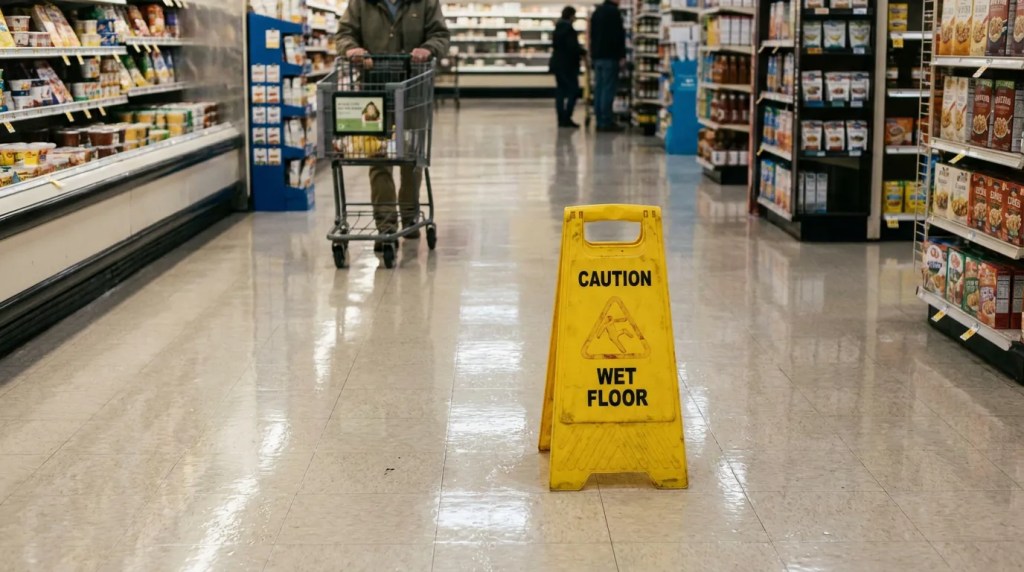
Understanding Your Rights After a Fall on Someone Else’s Property
Key Takeaways: To win a slip and fall lawsuit in New Mexico, you must prove four core elements: the property owner owed you a duty of care, breached that duty, caused your injury, and you suffered actual damages. Each element must be established by a preponderance of the evidence, and missing even one can defeat your claim. Because property conditions change quickly, preserving strong evidence early, photos, incident reports, and medical records, is often decisive. Special rules apply when the property owner is a government entity under the New Mexico Tort Claims Act, which waives immunity only in limited situations involving negligent maintenance. New Mexico’s comparative fault doctrine means partial responsibility may reduce but not necessarily bar your recovery. A three-year statute of limitations generally applies, so acting early is essential.
A successful slip and fall lawsuit in New Mexico requires you to prove four core elements: the property owner owed you a duty of care, breached that duty, caused your injury, and you suffered actual damages. More than one out of four older people falls each year, but less than half tell their doctor. When a fall happens due to unsafe conditions, New Mexico law may allow you to seek compensation, but the burden of proof rests on you.
If you or a loved one was hurt on unsafe property in Albuquerque, the team at Smith & Marjanovic Law is ready to listen. Call (505) 510-4440 or use our confidential case review form to discuss your next steps. Acting early protects both your health and legal options.
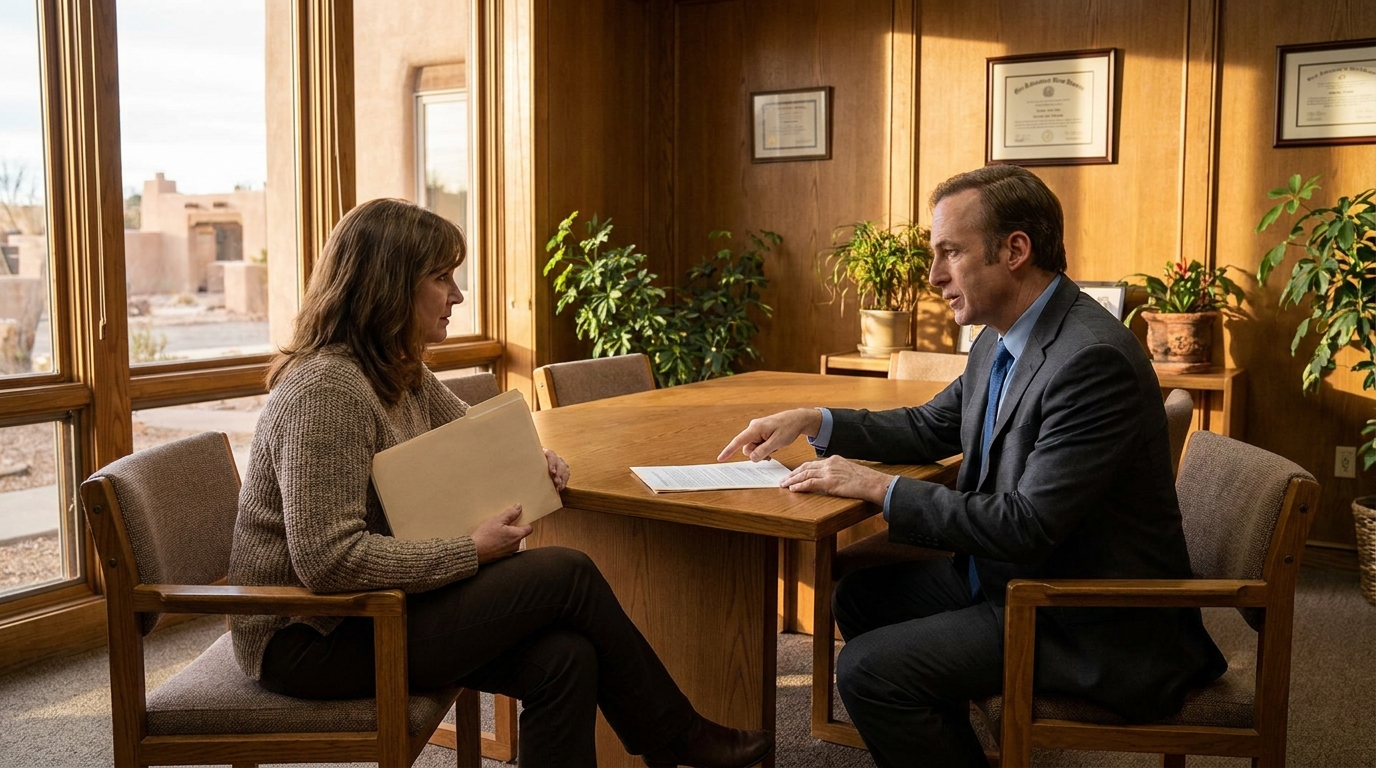
The Four Elements You Must Prove in a Slip and Fall Lawsuit New Mexico Courts Recognize
Every premises liability case is built on the same legal foundation. Slip and fall cases fall under negligence law, requiring the injured person to establish each element by a preponderance of the evidence. Missing even one element can defeat your claim. The four building blocks are:
- Duty of care: the property owner owed you a legal obligation to keep premises reasonably safe.
- Breach: the owner failed to meet that obligation.
- Causation: that failure directly caused your fall and resulting harm.
- Damages: you suffered measurable losses, such as medical bills or lost income.
Establishing the Property Owner’s Duty of Care
The duty of care is the starting point for any premises liability Albuquerque claim. New Mexico courts recognize that occupiers of land must exercise reasonable care for the safety of people on their property. This principle has been examined in New Mexico legal scholarship, including a New Mexico Law Review analysis titled "Occupiers of Land Must Exercise Reasonable" care. The scope depends on circumstances, including the foreseeability of harm and the relationship between visitor and property.
Showing a Breach Through Negligence
Proving negligence means demonstrating the owner knew or should have known about a hazard and failed to address it. The CDC lists home hazards including broken or uneven steps and throw rugs or clutter as fall risk factors. In stores, parking lots, or government buildings, similar conditions like wet floors, poor lighting, or damaged walkways may support a breach argument. The key question is whether a reasonable property owner would have corrected or warned about the condition.
💡 Pro Tip: Photograph the hazard immediately if you can safely do so. Conditions like spills or loose mats are often cleaned up within hours, and an early photo can become some of the strongest slip and fall evidence NM courts will weigh.
Connecting Causation to Your Damages
Causation links the owner’s breach to your specific injuries, and it is often where claims are contested. You must connect the hazard to how you fell and the harm that followed. Damages include medical treatment, lost wages, and pain and suffering. Falls are the most common cause of traumatic brain injuries.
Why Evidence Can Make or Break Your Claim
Strong, well-preserved evidence frequently determines whether a slip and fall claim Albuquerque residents bring succeeds or stalls. Because property conditions change quickly, proof gathered in the first days after a fall is far more persuasive than testimony months later. Surveillance footage, incident reports, witness information, and medical records all help build a clear picture of what happened.
The scale of fall-related harm underscores why this matters. Each year, there are about 3 million emergency department visits and 1 million hospitalizations due to older adult falls. If your fall was caused by another party’s negligence, preserving evidence early gives a personal injury attorney New Mexico families trust the materials needed to evaluate your claim.
💡 Pro Tip: Report the fall to the property manager or business in writing and request a copy of any incident report before you leave. A timely written record helps prevent later disputes about whether the fall occurred.
For a practical walkthrough of what to do after an accident, review these critical steps after a slip and fall to avoid common mistakes that weaken claims.
When the Property Owner Is a Government Entity
Falls on government-owned property in New Mexico follow special rules under the Tort Claims Act. Generally, government entities enjoy immunity, but the law waives that immunity in defined situations. Under Section 41-4-11(A) NMSA 1978, immunity does not apply to liability for damages resulting from bodily injury, wrongful death or property damage caused by the negligence of public employees while acting within the scope of their duties during construction and subsequent maintenance of any bridge, culvert, highway, roadway, street, alley, sidewalk or parking area. A separate waiver applies inside public buildings.
Section 41-4-6(A) NMSA 1978 provides that immunity does not apply to liability for damages resulting from bodily injury, wrongful death or property damage caused by the negligence of public employees while acting within the scope of their duties in the operation or maintenance of any building, public park, machinery, equipment or furnishings. These waivers have limits. Section 41-4-11(B) excludes liability for damages caused by a defect in plan or design, failure to construct or reconstruct, and deviation from standard geometric design practices. A New Mexico slip and fall case involving a roadway, sidewalk, or similar surface under Section 41-4-11 generally must focus on negligent maintenance rather than design choices. The building waiver in Section 41-4-6 contains no comparable design exclusion, and New Mexico courts have held that a claim is not barred simply because a dangerous condition may have originated in defective design.
💡 Pro Tip: Claims against government entities often involve shorter administrative notice deadlines separate from the civil lawsuit timeline. Treat any potential government claim as time-sensitive from day one.
How Comparative Fault Can Affect Your Recovery
New Mexico applies a comparative fault doctrine, which means your own conduct may reduce your recovery without automatically barring your claim. If a court finds you share responsibility, for example, by not noticing an open hazard, your damages may be reduced proportionally. This doctrine has been examined closely in New Mexico legal commentary on comparative fault. In Reichert v. Atler, the New Mexico Supreme Court held that the fault of a premises owner who negligently failed to protect patrons from foreseeable harm may be compared to the conduct of a third-party tortfeasor who caused the harm, with the owner responsible only for its percentage of fault rather than jointly and severally for the entire loss.
Being partially at fault does not necessarily end your case, though outcomes depend on specific facts. An experienced Albuquerque injury lawyer can help assess how comparative fault principles may apply to your situation.
How Long You Have to File a Slip and Fall Claim
New Mexico generally imposes a three-year deadline for personal injury lawsuits, and missing it can permanently end your claim. The three-year personal injury statute of limitation of Section 37-1-8 NMSA 1978 applies when the essence of a claim is in tort for personal injury. You can review the statutory text of Section 37-1-8 NMSA 1978 for the controlling language.
The clock generally starts when the injury occurs. Courts have explained that this statute generally begins to run from the time of injury, not the time of the negligent act. Some exceptions, such as discovery or tolling rules, may apply in limited circumstances, but courts interpret these narrowly. Do not assume an extension applies, and government claim deadlines are separate and often shorter.
💡 Pro Tip: Calendar your deadline well in advance and consult a lawyer early. Waiting until close to the three-year mark can limit your options and make evidence harder to gather.
Frequently Asked Questions
1. What is the most important thing to prove in a slip and fall case?
No single element stands alone, but causation is frequently the most contested. You must connect the property owner’s negligence directly to your injuries, which is why prompt medical care and documentation are valuable.
2. Can I still recover if I was partly at fault for my fall?
Generally, yes. Under New Mexico’s comparative fault doctrine, your recovery may be reduced by your percentage of fault, but partial fault does not necessarily bar your claim entirely.
3. How serious do my injuries need to be to file a claim?
There is no fixed severity threshold, though you must show actual damages. Falls are the leading cause of injury for adults aged 65 and older.
4. What if I fell in a government building or on a public sidewalk?
Special rules under the New Mexico Tort Claims Act apply. Immunity is waived only in certain situations, generally involving negligent operation or maintenance, and these claims often carry separate notice requirements.
5. How common are serious fall injuries?
They are widespread. More than one out of four older people falls each year, and you can review additional fall facts and statistics for context.
Protecting Your Claim Starts With the Right Information
Proving a slip and fall lawsuit New Mexico residents bring requires duty, breach, causation, and damages, all supported by timely evidence and accurate understanding of the law. Government claims add another layer through the Tort Claims Act, comparative fault may shape your recovery, and the three-year statute of limitations sets a firm deadline. Each case turns on its own facts.
If you are weighing a New Mexico slip and fall case, do not navigate it alone. Contact Smith & Marjanovic Law by calling (505) 510-4440, visiting our Albuquerque personal injury team online, or learning more about how we help injured clients in New Mexico. Reaching out early gives you the best opportunity to protect your rights and recovery.