

When a Pedestrian Steps Out of the Crosswalk, Do Drivers Still Have Duties?
Key Takeaways: Yes, a New Mexico driver generally must still try to avoid hitting a jaywalking pedestrian, because NMSA 1978, Section 66-7-337 requires due care toward any pedestrian on any roadway, regardless of right-of-way rules. A pedestrian crossing outside a crosswalk must yield to vehicles under Section 66-7-335, but losing the right of way generally does not remove the driver’s duty to warn, slow down, or take evasive action. Because New Mexico follows pure comparative negligence, a jaywalker may still recover damages reduced by their share of fault. Most injury claims must generally be filed within three years, but claims involving government entities generally require written notice within 90 days and have a shorter two-year filing deadline.
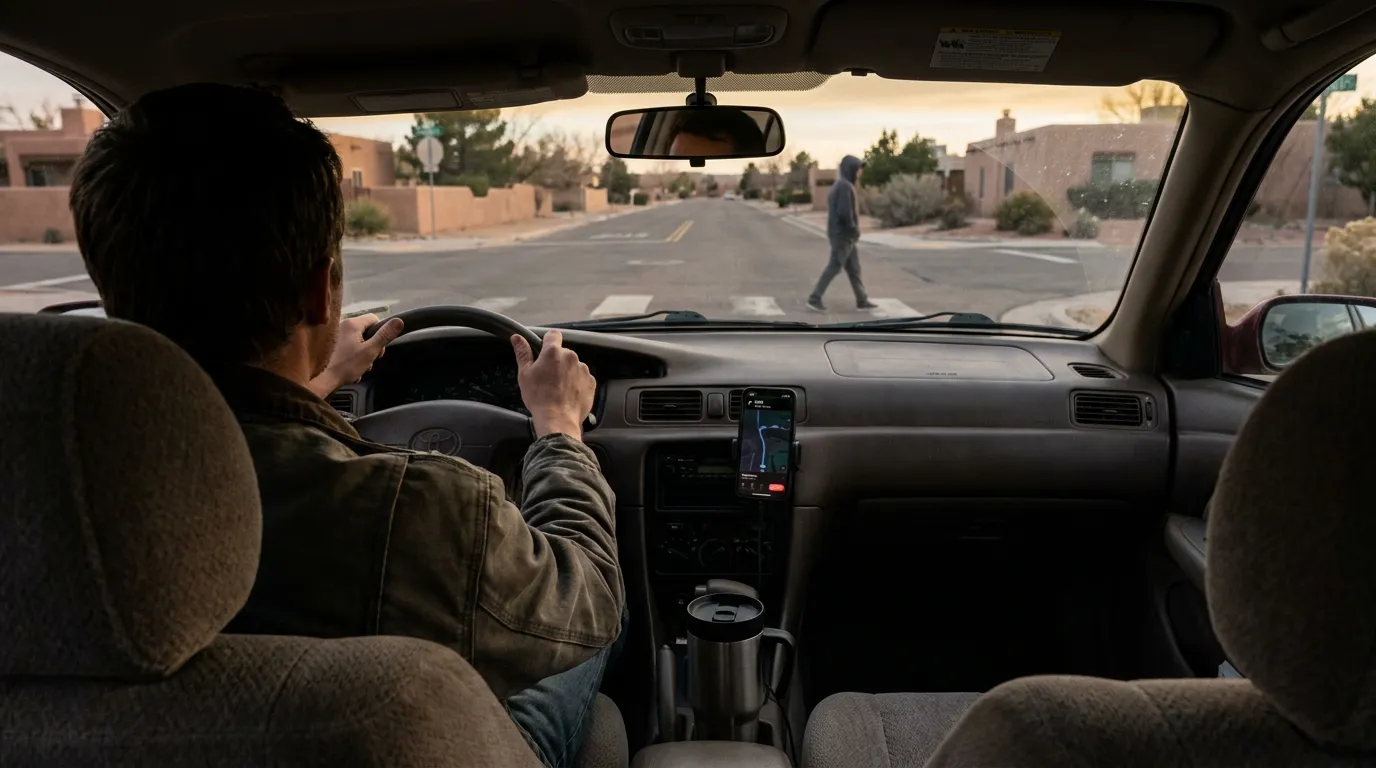
Yes, in most cases a New Mexico driver must still try to avoid hitting a pedestrian, even one who is jaywalking. Under NMSA 1978, Section 66-7-337, every driver must use due care to avoid colliding with any pedestrian on any roadway. That duty applies "notwithstanding" the other pedestrian provisions of Article 7, including the jaywalking statute in Section 66-7-335. A pedestrian who crosses outside a crosswalk may lose the right of way, but the driver generally keeps the duty to avoid a collision. If you were hurt while crossing a street in Albuquerque, a jaywalking label does not automatically end your claim.
If you were hit outside a crosswalk, getting legal guidance early can help protect your right to compensation. The team at Smith & Marjanovic Law can review how fault may be divided in your case and what evidence could support your claim. Speak with a jaywalking law New Mexico lawyer today. You can call (505) 510-4440 or contact us now for a free case review.
Understanding Jaywalking Law in New Mexico
New Mexico’s core jaywalking rule appears in NMSA 1978, Section 66-7-335(A). A pedestrian who crosses anywhere other than a marked crosswalk, or an unmarked crosswalk at an intersection, "shall yield the right of way to all vehicles upon the roadway." However, losing the right of way does not take away all legal protection, and local ordinances in places like Albuquerque may add their own crossing rules.
Other Pedestrian Crossing Rules
The statute also sets out related crossing requirements that can come up in injury claims:
- Tunnels and overpasses: Under Section 66-7-335(B), pedestrians must yield to all vehicles when crossing where a pedestrian tunnel or overhead crossing has been provided.
- Between signalized intersections: Under Section 66-7-335(C), when two adjacent intersections both have working traffic signals, pedestrians may not cross between them except in a marked crosswalk.
- Darting into traffic: Under Section 66-7-334(B), a pedestrian may not suddenly leave a curb or other safe place and walk or run into the path of a vehicle so close that the driver cannot yield.
- Passing stopped vehicles: Under Section 66-7-334(D), drivers coming from behind may not pass a vehicle stopped at a crosswalk to let a pedestrian cross.
What Happens When a Pedestrian Violates the Statute
Breaking the jaywalking statute is generally treated as a petty misdemeanor that may be handled through a penalty assessment. In a civil injury case, a jaywalking violation may be offered as evidence of the pedestrian’s own fault, and in some cases a court may treat it as negligence per se. A traffic citation and a civil injury lawsuit are separate proceedings, and the outcome of one does not automatically decide the other.
NMSA 66-7-337 and the Driver’s Duty of Due Care
NMSA 66-7-337 is the main statute that keeps drivers responsible when pedestrians cross outside a crosswalk. The law requires every driver to "exercise due care to avoid colliding with any pedestrian upon any roadway." Because the statute opens with the word "notwithstanding," it generally applies regardless of who technically had the right of way.
Specific Actions the Statute Requires
The statute names concrete steps drivers must take. Drivers must sound the horn when necessary and exercise proper precaution after seeing a child or any obviously confused or incapacitated person on the roadway.
Driver guidance points the same way. According to the New Mexico right-of-way handbook summary, drivers must still use due care and reduce speed or take evasive action to prevent a collision, even when a pedestrian lacks the right of way. A handbook summary is not binding; the statute itself is the binding authority.
How the Crosswalk Yield Rule Interacts With Jaywalking
Where traffic-control signals are not in place or not working, drivers generally must yield to pedestrians crossing within a crosswalk, slowing down or stopping if needed. That rule comes from NMSA 1978, Section 66-7-334(A). Section 66-7-334(C) cross-references Section 66-7-335(B), which states that a pedestrian crossing a roadway at a point where a pedestrian tunnel or overhead pedestrian crossing has been provided must yield the right of way to all vehicles, meaning the crosswalk yield rule in Section 66-7-334(A) does not apply in that situation. The crosswalk yield rule covers only pedestrians within a crosswalk, so it generally does not protect a jaywalker, but the separate due care duty in Section 66-7-337 generally still does.
💡 Pro Tip: If you noticed whether the driver honked, braked, or swerved before impact, write it down as soon as you can. These details may help show whether the driver met the duties in Section 66-7-337.
How Driver Negligence Is Proven in a Jaywalking Pedestrian Injury Claim
To recover compensation, an injured pedestrian generally must prove four elements: duty, breach, causation, and damages. The duty usually comes from Section 66-7-337 and the general duty of ordinary care. Breach may involve speeding, distracted driving, failing to keep a proper lookout, failing to brake, or failing to sound the horn. Causation links the driver’s conduct to your injuries, and damages cover your losses.
Evidence often determines whether a driver could have avoided the collision. Helpful evidence may include:
- Traffic or business surveillance video
- Witness statements
- Police crash reports
- Vehicle data and skid mark measurements
- Medical records documenting your injuries
Insurers often argue that a pedestrian "darted out" so suddenly that no driver could react. Section 66-7-334(B) does prohibit pedestrians from stepping into the path of a vehicle too close to yield. Whether that defense applies usually depends on visibility, distance, speed, and driver attention. Reconstruction evidence may help show whether a careful driver would have had time to stop.
💡 Pro Tip: Surveillance footage from nearby businesses may be erased within days or weeks. Asking for it to be preserved quickly can make a real difference.
Comparative Fault: Can You Recover if You Were Jaywalking?
New Mexico follows a pure comparative negligence system, so a jaywalker may still be able to recover damages even if mostly at fault. Your recovery is generally reduced by your percentage of fault rather than being barred, as long as the driver was at least partly at fault. This differs from modified systems in other states that cut off recovery at 50% or 51% fault, as explained in this overview of pure vs. modified comparative fault. For a closer look, read our article on whether you can file a claim after jaywalking in Albuquerque.
| Scenario | Pedestrian Fault | Driver Fault | Damages | Possible Recovery |
|---|---|---|---|---|
| Jaywalker hit by a speeding driver | 30% | 70% | $100,000 | $70,000 |
| Jaywalker hit by a distracted driver | 60% | 40% | $100,000 | $40,000 |
| Pedestrian darts out at close range | 90% | 10% | $100,000 | $10,000 |
These figures are only illustrations. Actual fault percentages depend on the evidence, and a judge or jury makes the final decision if the case goes to trial. If the driver is found not negligent at all, the pedestrian generally recovers nothing. Available insurance coverage may also limit the amount collected.
Pedestrian Safety and Crash Risks in New Mexico
Pedestrian crashes are a serious and ongoing concern in New Mexico. Federal crash data from the National Highway Traffic Safety Administration tracks pedestrian deaths by state and year, and New Mexico has often had one of the highest pedestrian fatality rates per capita in the country. Busy Albuquerque corridors with long distances between crosswalks can make mid-block crossings common, making the driver’s duty of due care especially important.
Protecting Your Claim: Deadlines and Next Steps
Deadlines can limit your ability to recover compensation after a pedestrian accident. In New Mexico, personal injury claims are generally subject to a three-year statute of limitations under NMSA 1978, Section 37-1-8. Wrongful death claims are also generally subject to a three-year deadline, which runs from the date of death under NMSA 1978, Section 41-2-2. Some exceptions may extend these deadlines, but courts interpret them narrowly.
Claims Involving Government Vehicles
Different rules may apply if a government driver or vehicle was involved. Under the New Mexico Tort Claims Act, NMSA 1978, Section 41-4-16, written notice is generally required within 90 days of the incident, though the deadline may not bar a claim if the government entity had actual notice. Lawsuits against government entities are generally subject to a two-year limit under Section 41-4-15, and damages may be capped under Section 41-4-19.
💡 Pro Tip: Get medical care promptly, even if your injuries seem minor. Gaps in treatment may be used to question how serious your injuries are.
Frequently Asked Questions
1. Does jaywalking law in New Mexico mean the pedestrian is automatically at fault?
No, a jaywalking violation does not automatically place all fault on the pedestrian. It may be offered as evidence of pedestrian fault, but the driver generally still owes a duty of due care under Section 66-7-337. Fault is generally divided by percentage.
2. Can I recover damages if I was more than 50% at fault?
Under New Mexico’s pure comparative negligence system, you may still recover if the driver was also negligent. Your recovery would generally be reduced by your share of fault.
3. What damages might be available in a jaywalking pedestrian injury case?
Recoverable damages may include medical expenses, lost income, and pain and suffering. Families who lost a loved one may have wrongful death claims, generally brought by the personal representative of the estate.
4. What if the driver says I ran out suddenly?
Drivers and insurers often raise this defense under Section 66-7-334(B). Video, witness accounts, and reconstruction evidence may show whether the driver had time to react.
5. How long do I have to file a claim?
Many New Mexico personal injury claims must be filed within three years under Section 37-1-8. Claims against government entities generally require notice within 90 days and must be filed within two years.
Holding Drivers Accountable Under New Mexico Law
New Mexico law generally requires drivers to try to avoid hitting pedestrians, including those crossing outside a crosswalk. Section 66-7-337 generally keeps the duty of due care in place regardless of right-of-way rules. Under the state’s pure comparative fault system, an injured jaywalker may still recover reduced damages if the driver was also at fault.
If a driver hit you while you were crossing outside a crosswalk, Smith & Marjanovic Law can help you understand your options. You can learn more about pedestrian claims after jaywalking, call (505) 510-4440, or schedule your free consultation today.
Disclaimer: This content is for informational purposes only and is not legal advice. Every case is unique, and results may vary. Consult an attorney about your specific circumstances.