
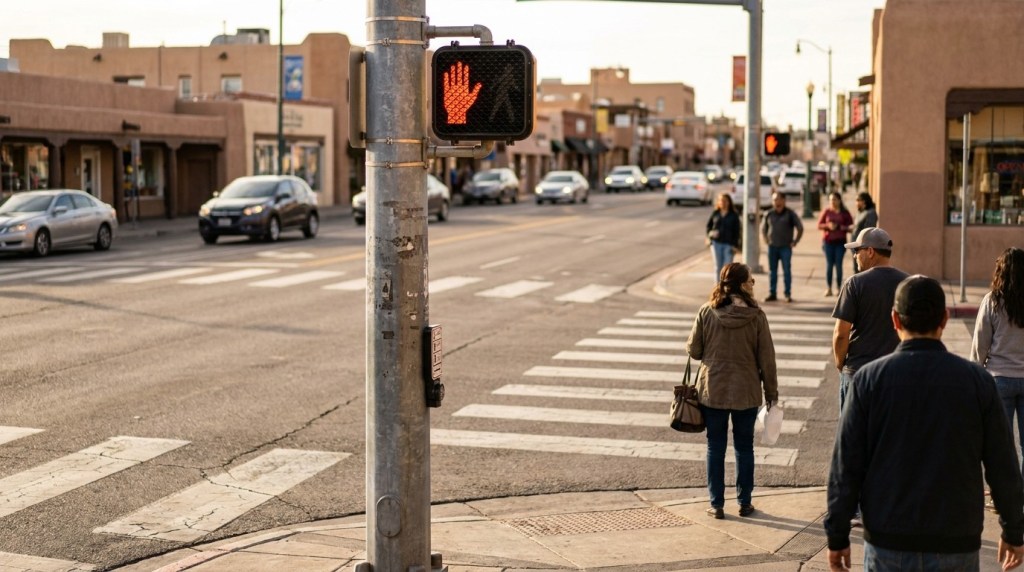
Pedestrian Hit by Car Albuquerque: Your Right to File a Claim
Key Takeaways: Yes, a pedestrian who was jaywalking in Albuquerque can often still file a claim, because New Mexico follows a pure comparative negligence standard that reduces recovery based on the walker’s share of fault rather than eliminating it. Drivers owe a legal duty to anticipate pedestrians and exercise reasonable care to avoid injuring them. New Mexico’s jaywalking statute is narrower than many assume, targeting walking "along and upon" a roadway rather than briefly standing in it. Proving a claim rests on duty, breach, causation, and damages, with evidence like video footage, crash reports, and medical records deciding how fault is divided. Factors such as speeding, impairment, or low-visibility conditions can substantially increase the driver’s share of responsibility.
Yes, an injured pedestrian in Albuquerque can often still file a claim even if they were jaywalking at the time of the crash. Jaywalking may affect how fault is divided, but under New Mexico’s pure comparative negligence system, partial fault does not automatically bar recovery. A walker who was technically violating a pedestrian traffic law can still pursue compensation when a driver’s negligence contributed to the collision.
Pedestrian crashes are a serious and growing concern across New Mexico. New Mexico has had the nation’s highest rate of pedestrian fatalities per capita in recent years, according to the Governors Highway Safety Association. Many residents searching for answers after a crash are doing so during a frightening time, often while facing medical bills and lost income.
If you or a loved one was injured while walking, the team at Smith & Marjanovic Law is ready to help you understand your options. You can call us at (505) 510-4440 or reach out through our online case review form to discuss what happened and what steps may protect your claim.
How New Mexico’s Comparative Negligence Rule Protects Injured Walkers
New Mexico follows a pure comparative negligence standard, which is central to any jaywalking injury claim. Under this doctrine, an injured person’s recovery is reduced by their own percentage of fault rather than eliminated entirely. So a pedestrian found 30% at fault for crossing outside a crosswalk could still recover the remaining portion of their damages.
This framework matters enormously for a pedestrian hit by car Albuquerque cases involving alleged jaywalking. Even if a walker shares blame, the driver’s share of responsibility remains relevant to compensation. To understand the mechanics in greater depth, review how pure comparative negligence in New Mexico shapes injury cases.
💡 Pro Tip: Avoid admitting fault at the scene or to an insurance adjuster. Statements like "I wasn’t looking" can be used to inflate your percentage of fault, even when the driver was speeding or distracted.
What New Mexico Law Actually Says About Jaywalking
New Mexico’s pedestrian statute defines the conduct often labeled jaywalking, but its scope is narrower than many assume. Under NMSA 1978, § 66-7-339(A), where sidewalks are provided it is unlawful for a pedestrian to walk along and upon an adjacent roadway. You can review the full text through the published version of the New Mexico pedestrian roadway statute.
The statute also addresses areas without sidewalks. Under NMSA 1978, § 66-7-339(B) and (C), where sidewalks are not provided, a pedestrian walking along and upon a highway shall, when practicable, walk only on the left side of the roadway or its shoulder facing traffic. Violations are generally treated as penalty assessment misdemeanors.
Importantly, courts have limited how far this statute reaches. New Mexico case law indicates the statute requires walking "along and upon" a roadway, not merely standing in it briefly. An annotation citing State v. Penman, 2022-NMCA-065 (later reviewed by the New Mexico Supreme Court, 2024-NMSC-024), reflects the view that the legislature did not intend to punish anyone observed standing in the road however briefly. This distinction can be significant when an insurer tries to characterize a momentary presence in the road as a clear violation.
Drivers Still Owe a Duty of Care to Pedestrians
A jaywalking pedestrian does not forfeit the driver’s legal obligations. Long-standing New Mexico precedent recognizes shared rights to the roadway. An annotation citing Russell v. Davis, 1934-NMSC-076, explains that drivers of automobiles and pedestrians both have the right to the use of the highway; the former must anticipate the presence of the latter and exercise reasonable care to avoid injuring them.
This duty becomes especially important in low-visibility conditions. Nationally, most pedestrian deaths happen in the dark, which is precisely when a driver’s attentiveness matters most. Nighttime pedestrian deaths are at their lowest point on Tuesday and peak on Saturday.
Proving Your Claim: Duty, Breach, Causation, and Damages
Every pedestrian injury claim generally rests on four legal elements. A plaintiff typically must show that the driver owed a duty of care, breached that duty, caused the injuries, and produced real damages. In a jaywalking accident claim Albuquerque residents pursue, the breach and causation elements often become the heart of the dispute.
Evidence is what turns a story into a provable case. The following categories frequently make a meaningful difference in pedestrian fault New Mexico disputes:
- Traffic camera, doorbell, or business surveillance footage of the collision
- The police crash report and any citations issued to either party
- Photographs of the roadway, lighting, skid marks, and vehicle damage
- Eyewitness contact information and statements
- Medical records documenting the nature and cost of your injuries
Alcohol and impairment can dramatically shift the fault analysis. Alcohol involvement, defined as a BAC of.01 g/dL or higher by either the driver or pedestrian, was reported in 46 percent of the traffic crashes that resulted in pedestrian fatalities in 2023. When a driver was impaired, that conduct may substantially increase their share of comparative fault.
💡 Pro Tip: Photograph the scene and your injuries as soon as it is safe, and write down what you remember the same day. Memory fades quickly, and contemporaneous notes can become valuable evidence.
Why Pedestrian Claims Are Rising and What That Means Locally
Pedestrian crashes have surged nationwide, providing important context for New Mexico claims. According to federal data, a pedestrian was killed every 72 minutes and injured every 8 minutes in traffic crashes in 2023. You can review the underlying federal findings in the national pedestrian traffic safety report.
The broader trend underscores how common these injuries have become. Pedestrian deaths accounted for 18 percent of all traffic fatalities and 3 percent of all people injured in traffic crashes in 2023.
| Where and When Risk Concentrates (2024) | Share of Pedestrian Traffic Deaths |
|---|---|
| Urban settings | 83% |
| Non-intersection vs. intersections vs. other locations | 73% / 18% / 9% |
| Dark conditions | 76% |
These patterns can directly influence a comparative negligence pedestrian New Mexico analysis. Most pedestrian traffic deaths occurred in urban settings, at non-intersection locations rather than intersections, and during dark conditions. Evidence about lighting, speed, and driver attention frequently shapes how fault is divided.
Pending Legislation Could Change the Rules
New Mexico lawmakers have considered tightening pedestrian roadway rules. During the 2024 special session, SB 11 proposed making it illegal to loiter on a median 36 inches or narrower in areas where the speed limit is 30 mph or more, aimed at protecting pedestrians and motorists in a state with the nation’s highest pedestrian fatality rate. You can read the proposal’s text on the SB 11 legislative page.
Proposed laws are not the same as enacted law, and this distinction matters. Any claim should be evaluated under the statutes actually in effect at the time of the crash. A pedestrian accident lawyer Albuquerque residents consult can help confirm which version of the law applies to a specific incident.
💡 Pro Tip: New Mexico’s general personal injury statute of limitations is typically three years, but deadlines can be shorter and notice requirements can apply when a government entity is involved. Courts interpret exceptions narrowly, so do not assume tolling or a discovery rule will extend your time.
Common Challenges Injured Pedestrians Face
Insurers often lead with the jaywalking argument to minimize payouts. A frequent tactic is to assign a high percentage of fault to the walker, hoping to discourage a claim entirely. Because New Mexico uses pure comparative negligence, that argument addresses how much you recover rather than whether you can recover at all.
Documenting damages thoroughly is another recurring hurdle. Recoverable damages may include medical expenses, lost income, and pain and suffering, but these must be supported with records and, in some cases, professional testimony. Preserving evidence early and seeking prompt medical care can strengthen the connection between the crash and your injuries.
Frequently Asked Questions
- Can I recover money if I was partly at fault for jaywalking?
Often, yes. Under New Mexico’s pure comparative negligence rule, your recovery is reduced by your percentage of fault rather than barred, though the outcome depends on the specific facts and evidence.
- Does standing briefly in the road count as jaywalking?
Not necessarily. New Mexico case authority suggests the statute targets walking "along and upon" a roadway, not merely standing in it briefly.
- What if the driver was speeding or impaired?
That conduct can increase the driver’s share of fault. Evidence of speeding or intoxication may significantly affect how a court or insurer apportions responsibility.
- How long do I have to file a personal injury Albuquerque claim?
New Mexico’s general personal injury deadline is typically three years, subject to exceptions. Shorter deadlines and notice requirements can apply when a government entity is involved, so prompt action is wise.
- Do drivers owe a duty even when I was outside a crosswalk?
Generally, yes. New Mexico precedent holds that drivers must anticipate pedestrians and exercise reasonable care, even where a walker was on the roadway unlawfully.
Moving Forward After a Pedestrian Injury
Being injured while walking does not mean you have lost your right to seek compensation, even if jaywalking is alleged. New Mexico’s comparative negligence framework, combined with a driver’s ongoing duty of care, often leaves room for a meaningful recovery. The facts, the evidence, and the timeline all influence the outcome, which is why early documentation and legal review can be valuable.
Every case turns on its own facts, so individualized guidance matters. If you have questions about a jaywalking injury claim, the team at Smith & Marjanovic Law can help you understand your rights and protect critical deadlines. Reach out through our confidential consultation request, speak with an Albuquerque injury attorney by calling (505) 510-4440, or send your details using our secure contact page to get started today.