
Why Your Car May Be Worth Less After Repairs in Albuquerque
Key Takeaways: A diminished value claim in New Mexico seeks compensation for the resale value your vehicle may permanently lose after a crash, even when repairs are done well, because accident history often follows the car through public reporting databases. This loss is generally separate from ordinary depreciation and is typically pursued as part of a property damage claim against the at-fault driver’s insurer rather than your own carrier. Newer, low-mileage vehicles with structural damage, airbag deployment, or major panel replacement tend to show a clearer measurable loss. Insurers frequently apply the 17c formula, which caps the base loss near 10% of vehicle value, but that method is an industry convention rather than a requirement under New Mexico law, so independent appraisals and comparable sales may support a higher figure. Early documentation, photographs, complete repair invoices, and caution before signing any property damage release can all help protect the claim, as can awareness of comparative fault and applicable filing deadlines. Because outcomes are fact-dependent, a review of your specific circumstances is the only reliable starting point.
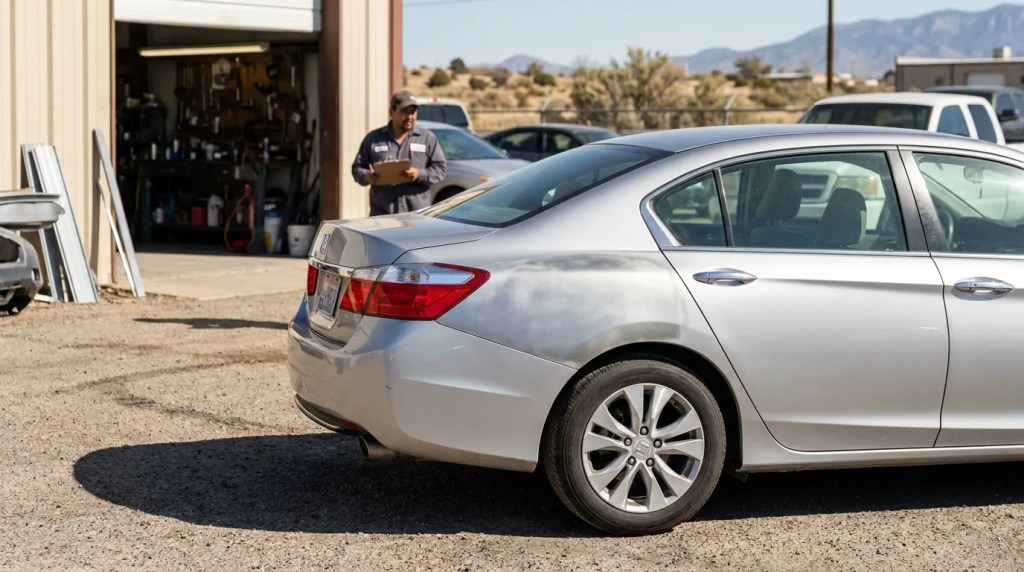
Even a flawless repair job cannot erase a crash from your vehicle’s history. A diminished value claim in New Mexico seeks compensation for the gap between what your car was worth before the collision and what it may be worth after repairs are finished. Because accident history often follows a vehicle through public reporting databases, buyers and dealers may offer less for a repaired car than for an identical one with a clean record. That difference can be a real financial loss, and under certain circumstances it may be recoverable from the at-fault driver’s insurer as part of a property damage claim.
If a crash left you with medical bills, missed work, and a car that may never sell for what it once did, the team at Smith & Marjanovic Law can review your situation. Call our office at (505) 510-4440 or contact us now to discuss how New Mexico law may apply to your losses.
The Diminished Value Definition Every New Mexico Driver Should Know
Diminished value describes the loss in a vehicle’s resale value that may occur after an accident, even once repairs are completed to manufacturer standards. Kelley Blue Book frames it as the difference between a car’s value before a crash and its value after being repaired. This aligns with New Mexico damages law: where damaged property can be repaired, recovery may include both the reasonable cost of repair and any residual difference in market value that repair does not restore.
This loss is generally distinct from ordinary depreciation, which affects vehicles regardless of crash history. A new vehicle can shed 20% or more of its value in the first year alone, which happens to careful drivers and crash victims alike. Post-repair value loss generally sits on top of that normal depreciation, and exists because of the collision.
Three categories of diminished value are commonly discussed in the auto claims world. These are market and claims-handling labels rather than statutory categories, but knowing which may apply can help you frame the conversation with an adjuster.
| Type | What It Reflects |
|---|---|
| Inherent diminished value | Market stigma from a reported accident, even after quality repairs |
| Repair-related diminished value | Additional loss from incomplete, cosmetic, or substandard repair work |
| Immediate diminished value | The difference in value measured before any repairs begin |
How a Diminished Value Claim Fits Into Property Damage Law
New Mexico’s Mandatory Financial Responsibility Act requires drivers to maintain liability coverage, and that framework generally governs post-crash claims. Under NMSA 1978, Section 66-5-208, evidence of financial responsibility must demonstrate the ability to respond in damages for property damage caused to others in at least the amount of $10,000 per accident, and that same section sets forth the minimum amounts of financial responsibility including property damage liability. Diminished value is generally pursued as one element of the property damage measure of recovery rather than a standalone cause of action, and any payment remains capped by the applicable policy limits.
The practical consequence is that these claims typically run against the at-fault driver’s insurer, not your own carrier. A first-party claim under your own policy may be limited or excluded by policy language, so reviewing the actual terms matters.
Before filing, confirm whether the other driver carried valid coverage on the date of the crash. The New Mexico Motor Vehicle Division administers an electronic verification system tracking compliance with mandatory insurance requirements. If the at-fault driver was uninsured, your available paths may change substantially. Under NMSA 1978, Section 66-5-301, insurers must offer uninsured motorist coverage, which includes both bodily injury and property damage components. The named insured may reject the entire UM/UIM coverage package in writing. Property damage losses under UM coverage may be subject to a deductible of up to $250 per accident, as permitted by Section 66-5-301(C).
Which Vehicles Tend to Support a Strong Lost Vehicle Value NM Claim
Newer vehicles with low mileage generally show a clearer diminished value impact. Kelley Blue Book notes the concept is most relevant for newer vehicles, since they experience the greatest depreciation effect after an accident. An older, high-mileage sedan may show little measurable difference once repaired, making the claim harder to substantiate.
Damage severity and odometer reading may both influence the size of the loss. Vehicles with structural or frame damage, airbag deployment, or significant panel replacement typically carry more market stigma than those with a repaired bumper, and insurers often weigh these variables heavily.
Factors That Commonly Affect Vehicle Resale Value Loss
- Pre-accident fair market value and trim level
- Extent and location of structural damage
- Total repair cost relative to vehicle value
- Mileage at the time of the collision
- Whether the crash appears in a commercial vehicle history report
- Make and model desirability in the local Albuquerque market
\u{1F4A1} Pro Tip: Photograph your vehicle from every angle before repairs begin and keep the complete repair invoice, including parts sourcing. Documentation created early is often more persuasive than a reconstruction attempted months later.
How Insurers Estimate Car Accident Diminished Value
Many carriers rely on a calculation commonly called the 17c formula. According to guidance on estimating diminished value, the approach applies a base loss percentage capped at 10% of the vehicle’s value, then adjusts using damage severity and mileage multipliers. The result is often a modest number that may not reflect what the open market would actually pay.
The 17c formula is an insurance industry convention, not a statutory requirement under New Mexico law. No provision of the Motor Vehicle Code mandates that method, and a claimant is generally free to present competing evidence of value, provided it is admissible and adequately supported. Independent appraisals, dealer trade-in offers, and comparable sales listings may all support a different figure.
That said, outcomes remain fact-dependent, and no method produces a guaranteed result. Adjusters may dispute an independent appraiser’s methodology, and the strength of your documentation often shapes the negotiation more than the formula itself. Presenting two or more independent valuations may create useful leverage.
Practical Steps After an Albuquerque Car Accident Claim
Preserving evidence early may help protect both your injury claim and your property damage claim. Crashes carry economic consequences well beyond medical bills, a point reflected in national motor vehicle crash statistics compiled by the National Safety Council, which track the substantial annual costs associated with collisions. Lost vehicle value can be one of those often-overlooked costs.
Consider taking these steps while the details are still fresh. Each one may strengthen the record you could later need to present.
- Obtain the crash report and confirm the at-fault driver’s insurance information
- Request a written pre-accident valuation from a dealership or independent appraiser
- Keep every repair estimate, supplement, and final invoice
- Save any written offer from a buyer or dealer that references the accident history
- Document all communications with adjusters in writing
Be cautious about signing a property damage release before you understand the full scope of your loss. Releases are frequently drafted broadly, and signing one may extinguish a diminished value claim you have not yet evaluated. Whether a release also affects an injury claim depends on its wording, so reading the language carefully, or having a lawyer review it, may help prevent an avoidable waiver.
When a Diminished Value Claim Overlaps With an Injury Case
Property damage and bodily injury are separate components of the same collision, and they are often negotiated separately. Adjusters may resolve the vehicle side quickly while the injury side remains open. A firm handling your albuquerque car accident claim can coordinate both so a quick property settlement does not compromise the larger recovery.
New Mexico applies a pure comparative fault system, meaning any percentage of fault attributed to you may reduce recovery proportionally but does not bar it outright. If the insurer contends you were partially responsible, that allocation may affect the diminished value payout just as it may affect other damages. Disputed fault is one of the more common reasons these claims stall.
Deadlines That May Apply to a New Mexico Auto Property Damage Claim
Property damage claims in New Mexico are subject to statutory limitation periods, and missing one may bar recovery entirely. Under NMSA 1978, Section 37-1-4, an action for injury to property against a private defendant is generally subject to a four-year period, while personal injury claims are generally subject to a three-year period under Section 37-1-8. Claims involving governmental entities follow a different track: the New Mexico Tort Claims Act generally requires written notice within ninety days of the occurrence and suit within two years, and those deadlines should not be confused.
Tolling and discovery-based extensions may exist in limited circumstances, such as claims by minors or certain incapacitated persons, and courts generally interpret them narrowly. Do not assume an exception will apply to your facts. Confirming the correct deadline early with an attorney is generally the safer approach. Additional guidance on car accident claim New Mexico topics may help you understand what to expect.
Frequently Asked Questions
1. Is a diminished value claim New Mexico drivers file the same as a repair claim?
Generally, no. A repair claim covers the cost of physically fixing the vehicle. A diminished value claim addresses the market value that may remain lost after those repairs are complete, typically treated as a separate element of property damage.
2. Can I pursue a property damage claim NM insurers dispute without a lawyer?
You can, and some straightforward claims may resolve directly. However, when the insurer applies a formula you disagree with or disputes fault, having counsel review the valuation evidence may improve the presentation of your position.
3. Does my own insurance company have to pay diminished value?
That generally depends on your policy language. Many first-party policies limit or exclude this type of loss, so the claim is more commonly directed at the at-fault driver’s carrier under its property damage liability coverage.
4. How much car accident diminished value can I expect to recover?
There is no fixed answer. The amount may depend on pre-accident value, damage severity, mileage, available policy limits, any comparative fault allocation, and the quality of your supporting evidence. Any attorney who promises a specific figure before reviewing your documentation is overstating what can be known.
5. What if the at-fault driver had no insurance?
Verification through the state’s system may confirm whether coverage existed. If it did not, your own uninsured motorist coverage, if not rejected in writing, may provide an avenue for property damage losses, subject to any applicable deductible and the other terms of your policy.
Protecting the Full Value of What You Lost
A collision can cost more than the repair bill. When your vehicle carries a permanent accident record, the resale value you lose may be a genuine, measurable harm that New Mexico’s property damage framework may allow you to recover. Success generally turns on early documentation, credible valuation evidence, and a clear understanding of which insurer may bear responsibility. Because every claim depends on its own facts, an evaluation of your specific circumstances is the only reliable starting point.
The attorneys at Smith & Marjanovic Law represent injured people across New Mexico and understand how insurers approach vehicle value disputes. Reach us at (505) 510-4440 or schedule your consultation to have your claim reviewed.
Disclaimer: This content is for informational purposes only and is not legal advice. Every case is unique, and results may vary. Consult an attorney about your specific circumstances.