
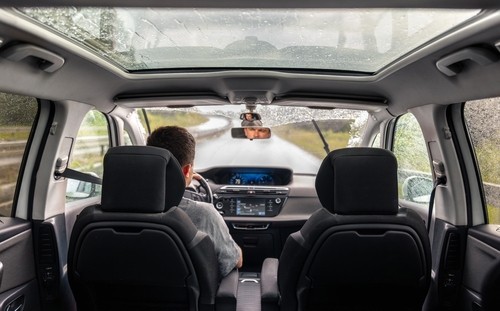
When Rain, Snow, and Ice Complicate Your Injury Claim
Bad weather doesn’t excuse bad driving, but it can significantly impact your personal injury case. If you’ve been injured in a weather-related accident on New Mexico roads, you face unique challenges requiring careful consideration of how environmental conditions affected crash circumstances, driver behavior, and legal liability.
Weather plays a role in thousands of New Mexico accidents annually. The Federal Highway Administration reports approximately 21 percent of motor vehicle crashes nationally are weather-related, with rain and wet pavement accounting for the majority (about 70–75 percent of weather-related crashes occur on wet pavement and 46–47 percent happen during rainfall). Understanding weather’s impact matters for securing fair compensation.
💡 Pro Tip: Document weather conditions immediately after your accident – take photos of road conditions, save weather reports from that day, and note visibility issues in your accident report.
Braving the stormy seas of a weather-related accident case can be daunting, but Smith & Marjanovic Law is here to anchor your journey. Feel the difference with our strategic approach to handling your unique challenges, ensuring you receive the compensation you deserve. Reach out today at (505) 510-4440 or contact us for guidance tailored to New Mexico’s unpredictable roads.
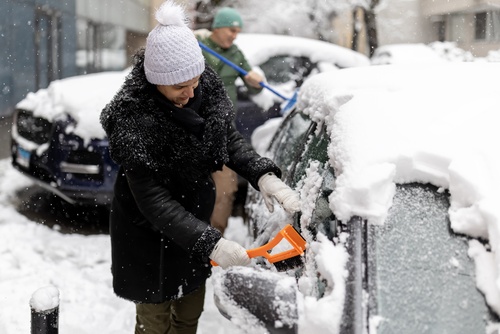
Understanding Weather’s Role with Your Personal Injury Lawyer in Albuquerque
Weather conditions don’t eliminate a driver’s duty of care – they increase it. New Mexico law requires drivers to adjust their driving to match road conditions, meaning speeding during a snowstorm or following too closely in heavy rain can establish negligence even if posted speed limits were followed. A personal injury lawyer in Albuquerque can help you understand how weather factors into comparative fault determinations.
The National Weather Service Albuquerque Forecast Office provides hazardous weather definitions that courts may consider. Winter Weather Advisories and Storm Warnings establish official classifications that can strengthen your case by documenting condition severity at your accident time.
New Mexico follows pure comparative negligence, meaning weather conditions can affect fault assignment between parties. Even if weather contributed to your accident, you may still recover damages reduced by your percentage of fault. Working with a personal injury lawyer in Albuquerque is crucial for presenting evidence that minimizes your assigned fault while highlighting the other driver’s failure to adapt.
💡 Pro Tip: Request official weather data from the National Weather Service for your accident date and location – this government documentation carries significant weight in negotiations and court proceedings.
Critical Steps After a Weather-Related Accident
Time-sensitive actions after a weather-related accident can make or break your case. The National Weather Service issues winter storm watches when significant winter weather is possible within 48 hours (typically issued 24 to 48 hours in advance) and warnings when winter storms are occurring or expected within 36 hours of onset (typically issued 12 to 36 hours in advance). This timeline helps establish whether drivers had adequate warning to prepare for hazardous conditions.
- Immediately photograph road conditions, including snow accumulation, ice patches, or standing water
- Obtain the police report through New Mexico’s TraCS system, which standardizes crash reporting statewide
- Request weather data within 30 days, as some services archive detailed conditions for limited periods
- Document injuries promptly, as weather-related accidents often involve multiple vehicles
- Contact witnesses quickly, as their memories of visibility and road conditions fade rapidly
The UNM Geospatial & Population Studies Traffic Research Unit maintains New Mexico Traffic Crash Data that can provide valuable context. This database includes weather condition fields helping establish patterns for similar accidents in your area.
💡 Pro Tip: Save screenshots of weather apps, local news weather alerts, and social media posts about road conditions from your accident date – these contemporaneous records often capture details official reports might miss.
Building Your Weather-Related Injury Case
Successfully resolving a weather-related personal injury case requires demonstrating the other driver failed to exercise reasonable care given conditions. The Federal Highway Administration documents that "in heavy snow, average freeway speeds can decline by 5 to 40 percent," establishing a baseline for safe driving adjustments. Your personal injury lawyer in Albuquerque will use this data to show when drivers failed to reduce speed appropriately.
Smith & Marjanovic Law understands the nuances of weather-related accidents in New Mexico. The firm combines thorough investigation of weather data with driver behavior analysis to build compelling cases. Recent Albuquerque Police 2024 traffic statistics show 73 fatal crashes and 72,845 traffic citations, highlighting ongoing road safety challenges in varying conditions.
Insurance companies often blame weather entirely for accidents, avoiding their client’s liability. However, New Mexico law is clear: drivers must maintain vehicle control regardless of conditions. A skilled personal injury lawyer in Albuquerque can counter these tactics by demonstrating how the at-fault driver’s actions, not just weather, caused your injuries.
💡 Pro Tip: Keep a detailed journal of how weather conditions affected your accident and recovery – insurance adjusters often overlook how severe weather can complicate medical treatment and extend recovery times.
Types of Weather Evidence That Strengthen Your Case
Weather evidence comes in many forms, each serving a specific purpose. Official government weather data provides objective proof of conditions, while eyewitness accounts add human perspective about visibility and road surfaces. Your personal injury lawyer in Albuquerque will know which evidence types carry the most weight with insurance companies and juries.
Government Weather Documentation
The National Weather Service maintains detailed records including hourly observations, radar data, and issued advisories or warnings. These official records are particularly powerful because they’re maintained by disinterested government agencies using scientific instruments. Courts give substantial weight to this objective data when determining whether conditions required extra caution.
Beyond basic temperature and precipitation data, specialized reports can show wind speed, visibility measurements, and road surface temperatures indicating ice formation. The NMDOT Traffic Records Unit incorporates weather fields in crash reports through the TraCS system, creating official documentation linking weather to specific accidents.
💡 Pro Tip: Request "forensic weather reports" from certified meteorologists for high-value cases – these detailed analyses can pinpoint exact conditions at your accident location and time.
Common Weather-Related Accident Scenarios
Different weather conditions create distinct accident patterns and legal considerations. Heavy rain often leads to hydroplaning accidents where drivers lose control on water-covered roads. These cases frequently involve questions about tire tread depth, vehicle speed, and whether the driver attempted to brake or steer through standing water.
Winter Weather Challenges
Snow and ice accidents in the Albuquerque area present unique challenges. While the city sees less winter precipitation than northern New Mexico, drivers here may be less experienced with winter driving. Black ice on bridges and overpasses creates particularly dangerous conditions. The Sandia Mountains’ proximity means weather can change dramatically over short distances, adding complexity to accident reconstruction.
Multi-vehicle pileups become more common during winter storms, complicating liability determinations. New Mexico’s comparative fault system means each driver’s actions must be evaluated separately, considering their position in the chain reaction and response to conditions. Federal law through Title 23 U.S.C. Section 409 protects certain NMDOT crash data compilations from discovery, requiring strategic approaches to obtaining evidence.
💡 Pro Tip: In chain-reaction accidents, document your position in the sequence – being hit first versus joining an existing pileup significantly affects liability assessment.
Frequently Asked Questions
Weather-Related Accident Concerns
Understanding how weather affects your personal injury case helps you make informed decisions about pursuing compensation. These common questions address key concerns about liability, evidence, and the legal process when weather plays a role.
💡 Pro Tip: Prepare a weather timeline for your attorney showing conditions before, during, and after your accident – this context helps establish whether drivers had adequate warning to adjust their behavior.
Legal Process and Compensation
The intersection of weather conditions and personal injury law raises unique procedural questions requiring careful navigation with experienced legal guidance.
💡 Pro Tip: Don’t accept quick settlement offers after weather-related accidents – the full extent of vehicle damage and injuries may not be apparent immediately, especially with ice-related damage or cold-weather injury complications.
1. If weather caused my accident, can I still recover damages from another driver?
Yes, weather doesn’t eliminate driver responsibility. All drivers must adjust their speed, following distance, and behavior to match conditions. If another driver failed to drive safely for the weather and caused your injuries, they can be held liable despite challenging conditions.
2. What weather evidence should I collect for my personal injury case?
Gather official weather reports, photographs of road conditions, witness statements about visibility, any weather warnings issued, and dashboard camera footage if available. Also save news reports about conditions and any road closure or advisory notices from that day.
3. How do insurance companies use weather to deny claims?
Insurance companies often argue weather was an "act of God" that caused unavoidable accidents. They may claim their insured driver couldn’t have prevented the accident. An experienced attorney can counter these arguments by showing the driver failed to adjust to known conditions.
4. Does bad weather extend the statute of limitations for filing a claim?
No, weather conditions don’t extend New Mexico’s statute of limitations for personal injury claims. You must file within the standard timeframe regardless of weather at your accident time. This makes prompt action essential even if severe weather complicates immediate investigation.
5. Can I be partially at fault for driving in dangerous weather?
Potentially, yes. If you chose to drive in extremely dangerous conditions when authorities advised against travel, this might affect your compensation percentage. However, simply being on the road during bad weather isn’t automatic negligence – the key is whether you drove appropriately for conditions.
Work with a Trusted Personal Injury Lawyer
Weather-related accidents require attorneys who understand both the science of weather impacts and the intricacies of New Mexico personal injury law. The right legal representation investigates thoroughly, gathering weather data and witness accounts while building a compelling narrative about driver responsibility despite challenging conditions.
Smith & Marjanovic Law brings comprehensive understanding of how weather evidence integrates with personal injury claims. The firm successfully challenges insurance company attempts to blame weather alone for accidents, securing fair compensation for clients injured due to other drivers’ failure to adapt to conditions.
Don’t let New Mexico’s unpredictable weather leave you out in the cold. Smith & Marjanovic Law is here to navigate the nuances of your case with precision and care. Call us at (505) 510-4440 or contact us today to turn the tide in your favor.