
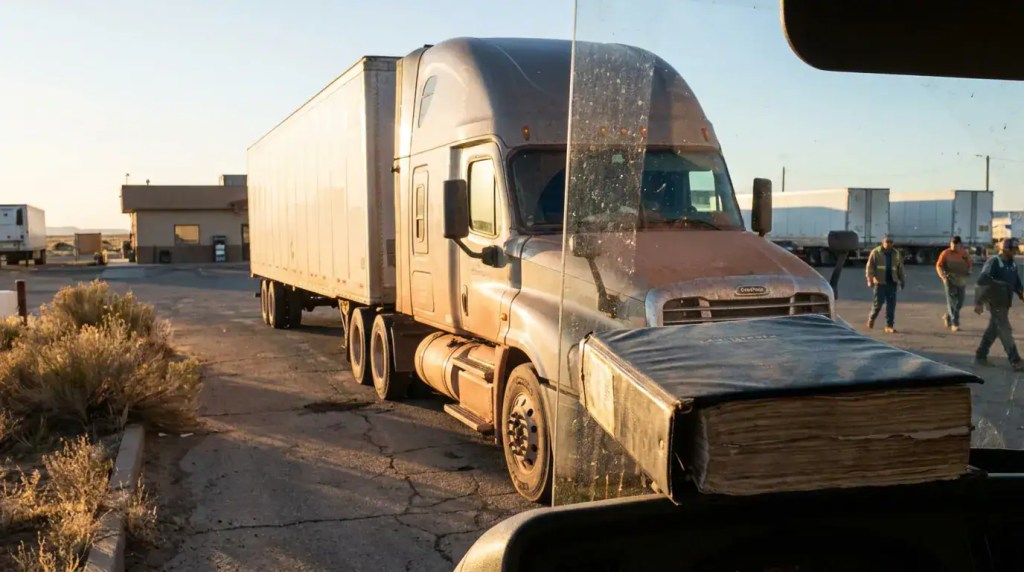
How Trucker Hours-of-Service Records Become Crash Evidence
Key Takeaways: A truck driver’s logbook can serve as powerful evidence for proving fault in a New Mexico crash. Logbooks and electronic logging devices record duty status, driving time, and rest periods. When they reveal hours-of-service violations, skipped breaks, or falsified entries, that documentation helps establish negligence. Because New Mexico follows pure comparative negligence and operates as an at-fault state, evidence increasing a driver’s or carrier’s share of blame directly boosts recovery. Attorneys prove fault by cross-referencing logs against GPS, fuel receipts, toll records, and shipping manifests using the civil "preponderance of the evidence" standard. Multiple parties may share liability, so preserving records quickly is essential. Strict deadlines, generally a three-year statute of limitations, make early action critical.
Yes, a truck driver’s logbook can be powerful evidence for proving fault in a New Mexico crash, though it rarely stands alone. Logbooks and electronic equivalents record when a driver was on duty, driving, and resting. When records show a driver exceeded federal hours-of-service limits or falsified entries, that documentation helps establish negligence. Because New Mexico allows recovery even when partly at fault, this proof can meaningfully shift how responsibility is divided after a serious collision.
At Smith & Marjanovic Law, our New Mexico truck accident attorneys understand how quickly critical records disappear after a crash. If you or a loved one suffered injury involving a commercial truck, call our team at (505) 510-4440 or reach out through our contact page to discuss how logbook evidence may apply to your situation.

What Truck Driver Logbooks Actually Record
A logbook is a running record of a commercial driver’s duty status, required because federal law limits operating hours without rest. Most interstate carriers now use electronic logging devices, which automatically capture driving time, engine hours, and location data. These records enforce mandatory rest periods to reduce fatigue-related crashes.
The information inside these logs reveals patterns a police report alone may not capture. Entries may show a driver was behind the wheel longer than permitted, skipped required breaks, or manipulated their status to appear compliant. Comparing logs against fuel receipts, toll records, GPS data, and delivery timestamps often exposes inconsistencies pointing toward driver fatigue.
💡 Pro Tip: Request in writing that the trucking company preserve all electronic logging data, dispatch records, and maintenance files immediately after a crash. A formal preservation letter can prevent routine deletion of records that may support your claim.
Why Hours-of-Service Rules Carry Legal Weight
Violations of the Federal Motor Carrier Safety Regulations are among the most common fault allegations in trucking litigation. These rules govern driver hours and logbook accuracy, so documented violations can support negligence theories, though violations alone don’t automatically establish liability and must be tied to causing the crash. Independent legal guides confirm that negligence and regulatory breaches are frequently central to how courts evaluate truck accident lawsuits.
New Mexico also regulates commercial motor carriers through its own administrative framework. The state’s motor carrier provisions are codified in Title 18, Chapter 3 of the New Mexico Administrative Code (18.3 NMAC). Specifically, 18.3.3 NMAC addresses motor carrier financial responsibilities (insurance requirements). Section 18.3.1 NMAC contains general administrative provisions governing motor carriers in New Mexico (such as definitions, operating authority compliance, and inspection procedures), while driver qualifications and safety compliance relevant to crash investigations are primarily addressed in 18.3.4 NMAC (Safety Requirements) and 18.2.3 NMAC (administered by the New Mexico Department of Public Safety, which contains hours-of-service regulations adopting 49 C.F.R. Part 395). To understand how these violations translate into claim leverage, review how hours of service violation New Mexico rules affect your case.
Why Logbooks Matter Under New Mexico Fault Law
New Mexico follows pure comparative negligence, making proving the other party’s fault especially valuable. New Mexico adopted this system through Scott v. Rizzo (1981), when the state supreme court rejected contributory negligence. Under this doctrine, an injured person may recover damages reduced by their own fault percentage, with recovery barred only if found 100 percent at fault. Logbook evidence increasing a truck driver’s share of blame directly increases available compensation.
This framework matters because insurers work to shift responsibility onto injured people. Adjusters attempt to raise a claimant’s assigned fault percentage to reduce payouts. Reliable driver logs serve as objective evidence countering insurer attempts to blame the victim.
New Mexico is also an at-fault state with no PIP or no-fault requirement. All injury claims proceed under the at-fault system, meaning the negligent driver’s liability insurance is the primary recovery source. Because proving fault sits at the center of every claim, semi-truck crash evidence like logbooks often becomes decisive.
💡 Pro Tip: Keep your own detailed record after a crash, including photos, medical bills, and a daily recovery journal. This personal documentation works alongside trucking records to build a fuller picture of both fault and damages.
How New Mexico Truck Accident Attorneys Use Logbooks to Prove Fault
Proving fault with a logbook requires cross-referencing, not simply reading one document. Skilled New Mexico truck accident attorneys compare a driver’s logged hours with electronic control module data, cell phone records, weigh station timestamps, and shipping manifests. When these sources contradict the official log, the inconsistency supports an inference that the driver was fatigued or records were altered.
Civil cases use a lower burden of proof than criminal cases, benefiting injured plaintiffs. In civil claims, plaintiffs must prove key elements by a preponderance of the evidence, less stringent than proof beyond a reasonable doubt. Logbook evidence doesn’t need to be airtight to be persuasive; it needs to make the driver’s negligence more likely than not.
Automobile-related torts remain among the most litigated civil case types. National data shows plaintiffs won a majority of auto tort cases, though outcomes depend on specific facts. Logbook and driver logs evidence in New Mexico can be the element that tips a fatigue-related trucking case in an injured person’s favor.
Common Challenges When Relying on Logbook Evidence
Logbook evidence is valuable but comes with practical hurdles. Records can be lost, overwritten, or claimed unavailable if not preserved quickly. Some carriers resist producing complete data, and interpreting raw electronic logs often requires technical analysis.
Common obstacles include:
- Routine deletion of electronic logging data before a claim is filed
- Discrepancies between paper logs and electronic records requiring reconstruction
- Disputes over whether the driver was on duty at the crash moment
- Multiple corporate entities each holding different pieces of the record
Multiple Parties Who May Share Responsibility
Truck accident claims are legally more complex than ordinary car crashes because several parties can share fault. Accidents involving commercial trucks are far more complicated than typical car accidents, and injured people may have claims against the driver, employer, freight broker, and other responsible companies. Logbook evidence showing driver negligence can implicate more than the driver alone.
Under respondeat superior, an employer can be liable for an employee’s actions if the driver was working within the scope of employment. Logbook records confirming a driver was on duty and hauling a load help establish that employment connection. This is often central to reaching a carrier’s larger insurance policy rather than only the driver’s coverage.
Employers can also face direct liability for negligent hiring, supervision, or retention. When a company ignored repeated hours-of-service violations or pressured a driver to skip rest, logbook history may demonstrate that pattern. These layered theories of commercial truck negligence in New Mexico are why investigating semi-truck crashes early is so important. Learn more about protecting your rights on our dedicated semi-truck injury Albuquerque resource.
💡 Pro Tip: Do not give a recorded statement to a trucking company’s insurer before understanding your rights. Adjusters may use your words to increase your comparative fault percentage.
Deadlines That Affect Your Ability to Use Logbook Evidence
Even the strongest logbook evidence loses value if you miss the filing deadline. New Mexico generally applies a three-year statute of limitations to personal injury claims under N.M. Stat. § 37-1-8, and wrongful death claims must generally be filed within three years under NMSA § 41-2-2. A wrongful death claim generally accrues on the death date, not the accident date. Claims against a government entity face different and often shorter deadlines under the New Mexico Tort Claims Act.
Different claim types carry different limitation periods, so overlapping deadlines are common. A collision might involve personal injury, wrongful death, and property damage claims, each with its own window. Resources compiling New Mexico filing deadlines organize these civil claims by category.
Courts interpret tolling and discovery-rule exceptions narrowly, and they don’t apply automatically. In limited circumstances a deadline may be paused, but never assume an extension applies without confirming your specific facts with counsel.
| Claim Type | General Limitation Period | Governing Authority |
|---|---|---|
| Personal injury | 3 years | N.M. Stat. § 37-1-8 |
| Wrongful death | 3 years | NMSA § 41-2-2 |
| Comparative fault standard | Applies at trial | Scott v. Rizzo (N.M. 1981) |
💡 Pro Tip: Contact a lawyer well before the deadline approaches. Investigations relying on preserving electronic logs are far more effective when they begin within days or weeks of the crash, not years later.
Frequently Asked Questions
1. How long are truck driver logbooks kept after a crash?
Retention periods vary by record type and carrier policy. Electronic logging data may be retained for months, but some records can be overwritten sooner. Sending a preservation request quickly is the safest way to protect this evidence.
2. Can I still recover damages if I was partly at fault?
Yes, under New Mexico’s pure comparative negligence rule you may recover even if partly responsible. Your damages are reduced by your fault percentage, with recovery barred only if you are found entirely at fault. Strong evidence of truck driver negligence can materially affect your recovery.
3. Do logbooks alone prove the trucking company was negligent?
Not by themselves, but they can be a critical building block. Logbooks often work with GPS data, maintenance records, and employment files to show negligence by the driver or carrier. Outcomes depend on the full body of evidence.
4. What if the driver used paper logs instead of electronic ones?
Paper logs remain relevant, though easier to falsify. Investigators may compare paper entries against fuel and toll records to check accuracy. Discrepancies can support an inference of hours-of-service violations.
5. Is the trucking company’s insurer on my side?
No, insurers aim to minimize what they pay. Adjusters may try to maximize your assigned fault to reduce payouts. Thorough documentation and early legal guidance help protect your position.
Protecting Your Right to Full Compensation
Truck driver logbooks can be decisive in proving fault in a New Mexico crash, but their value depends on preserving them quickly and analyzing them alongside other records. Because the state follows pure comparative negligence and operates under an at-fault insurance system, evidence increasing a driver’s or carrier’s share of responsibility directly affects recovery. Multiple parties may share liability, and strict filing deadlines apply, so early action matters.
If you are weighing options after a serious commercial truck collision, the team at Smith & Marjanovic Law is ready to help you understand how logbook and other evidence may support your claim. Call our New Mexico truck accident attorneys today at (505) 510-4440 or request a consultation online to take the next step toward protecting your rights.