

What Happens If You Have No Insurance but the Other Driver Was at Fault in New Mexico
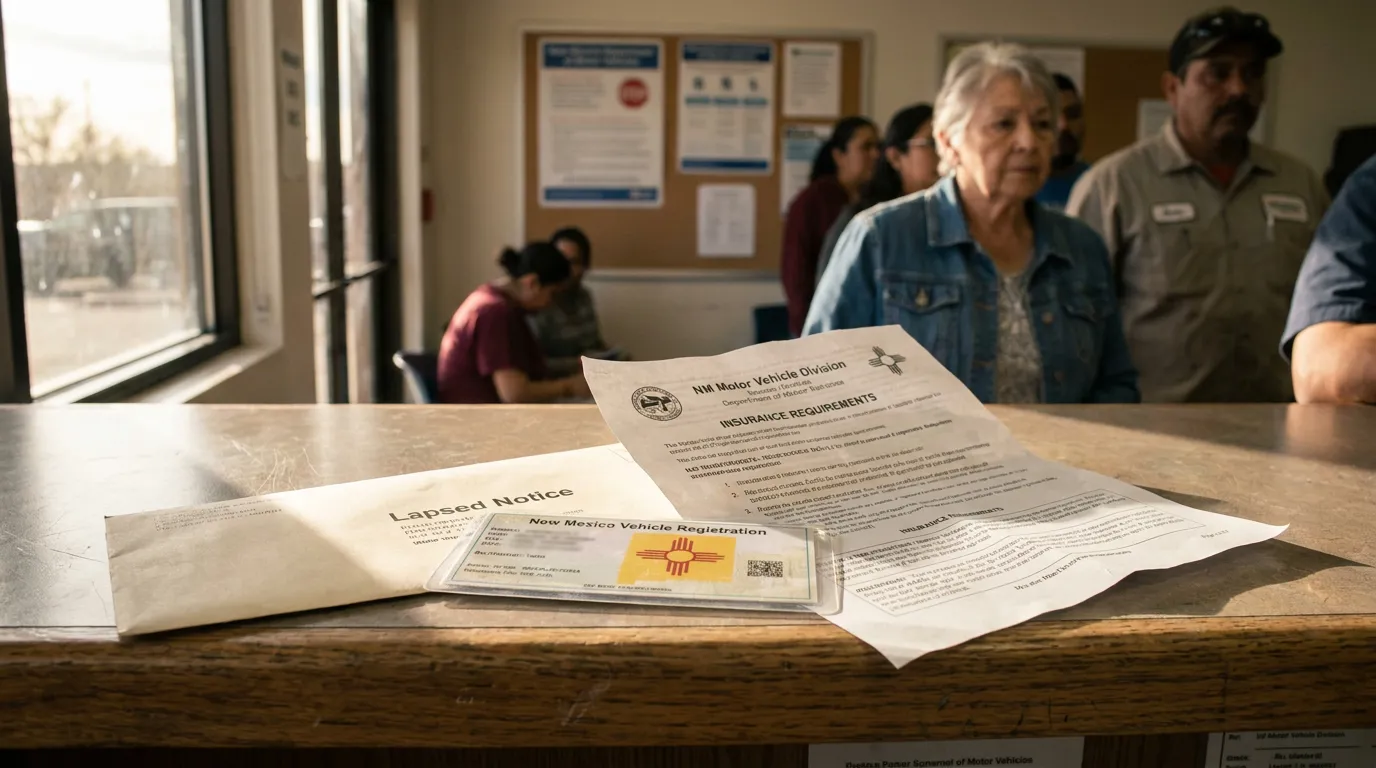
Being uninsured does not strip you of your right to pursue the driver who caused your injuries. New Mexico follows an at-fault, or tort, system, which means injury claims proceed against the negligent driver rather than through a mandatory no-fault framework. In fact, New Mexico does not require PIP, and all injury claims proceed under the at-fault system, meaning the negligent driver’s liability insurance is the primary source of recovery. That structure is precisely why an uninsured victim can still recover.
The core question in any crash claim is who was negligent, not who carried insurance. If the other driver breached a duty of care, caused the collision, and produced measurable damages, you generally have a viable negligence claim. So when people ask what happens if you have no insurance but the other driver was at fault in New Mexico, the honest answer is that your claim survives, though certain practical hurdles and penalties may apply to your uninsured status separately.
💡 Pro Tip: Keep your uninsured status separate in your mind from your injury claim. Driving without insurance may carry its own consequences under state law, but it does not cancel the other driver’s liability for your losses.
How Fault Affects an Uninsured Victim’s Recovery
New Mexico’s comparative fault rule works in favor of injured claimants, even those partially responsible. The state applies pure comparative negligence, so your compensation is reduced by your percentage of fault but is not eliminated. As one source explains, New Mexico follows pure comparative negligence, a doctrine adopted by the New Mexico Supreme Court in Scott v. Rizzo (1981), and your percentage of fault simply reduces your damages; it never eliminates your right to recover. For example, a claimant found 35% at fault on an $80,000 claim could still recover roughly $52,000.
Proving the other driver’s negligence often depends on strong, well-preserved evidence. Police reports, witness statements, photographs, and medical records all help establish causation and the extent of your damages. Building this record early is one reason many injured people work with a car accident attorney in New Mexico who can coordinate the investigation while they recover.
Why the Police Accident Report Matters
The certified crash report is a valuable tool for any claimant, insured or not. New Mexico law gives either party to a civil action or arbitration the right to obtain it. Under the certified accident report rule, the investigating agency shall furnish a certified copy of the investigating officer’s accident report to either party to the arbitration or civil action, and that certified copy is prima facie evidence that the owner or operator of the other motor vehicle is either insured or uninsured. This can matter greatly when insurance status becomes a disputed issue.
That same statute expressly links accident-report evidence to coverage disputes. In other words, whether a driver is insured or uninsured is a legally recognized issue in New Mexico crash litigation. A certified copy of the officer’s accident report may be introduced into evidence in any arbitration or civil action involving the insurer’s liability containing uninsured motorist coverage as required by Section 66-5-301 NMSA 1978 to prove that the owner or operator of the other motor vehicle is either insured or uninsured.
The Deadlines That Can Make or Break Your Claim
Missing a filing deadline can bar your recovery no matter how clear the other driver’s fault. New Mexico sets specific statutes of limitations depending on the type of harm, and courts generally interpret exceptions to these deadlines narrowly. You should not assume that tolling or a discovery-rule extension automatically applies, because such extensions arise only in limited circumstances.
Different claims carry different clocks, so timing deserves close attention. For personal injury, New Mexico has a 3-year statute of limitations for personal injury claims under N.M. Stat. § 37-1-8. Property and vehicle damage claims generally allow more time, as the state provides four years for injuries to property, including through professional negligence, under NMSA 1978, § 37-1-4. You can review a broader overview of New Mexico filing deadlines to understand how these windows differ.
| Type of Claim | General Deadline | Statute |
|---|---|---|
| Personal injury | 3 years | NMSA 1978, § 37-1-8 |
| Property/vehicle damage | 4 years | NMSA 1978, § 37-1-4 |
| Claims vs. government entity | 2 years (plus notice) | NMSA 1978, § 41-4-15(A) |
A shorter deadline and extra requirements apply when a government party is involved. If a public employee or governmental entity caused your crash, the timeline tightens considerably. The state allows two years for claims against a governmental entity or a public employee under NMSA 1978, § 41-4-15(A), and the claimant must first provide conforming written notice within ninety days of the occurrence under NMSA 1978, § 41-4-16 (six months in wrongful death cases). This administrative notice requirement is separate from filing a civil lawsuit, and failing to give proper notice can jeopardize an otherwise valid claim.
💡 Pro Tip: Treat the earliest possible deadline as your working deadline. If any chance exists that a city, county, or state vehicle was involved, calendar the two-year government timeline and the 90-day notice requirement immediately.
What Compensation May Be Available
New Mexico does not place a statutory cap on most compensatory damages in ordinary injury cases. This means your recovery against a private at-fault driver is generally measured by your actual losses rather than an arbitrary limit. That said, statutory caps do apply in certain contexts, such as claims brought against government entities under the Tort Claims Act and medical malpractice claims. For claims against government entities under the Tort Claims Act, per NMSA 1978 Section 41-4-19, liability is capped at $300,000 for all past and future medical and medically related expenses arising out of a single occurrence, and $400,000 to any person for all other non-property, non-medical damages arising out of a single occurrence, with an outer ceiling of $750,000 for all claims other than medical or medically related expenses. Medical-malpractice caps depend on the type of provider: independent outpatient health-care facilities (such as urgent care centers and ambulatory surgical centers) faced a $750,000 cap for injuries occurring in 2022 and 2023, which rose to $1,000,000 for injuries occurring in 2024, with annual inflation adjustments beginning in 2025. Separately, individual independent health-care providers (e.g., doctors and nurses) have a $750,000 cap that began adjusting annually for inflation via the CPI beginning January 1, 2023, but that cap did not rise to $1,000,000. Hospital-controlled facilities face higher caps generally ranging from $4,000,000 to $6,000,000 depending on the year of injury.
Recoverable losses in a typical auto accident claim may include several categories. Depending on the facts, an injured claimant may pursue:
- Medical expenses, both current and reasonably anticipated
- Lost wages and reduced earning capacity
- Vehicle repair or replacement costs
- Pain, suffering, and diminished quality of life
Most claims resolve without a trial, though litigation remains a real option. A car accident claim can get resolved in a number of ways, usually by a settlement that you receive from the at-fault driver’s car insurance carrier, while some accidents involve claims through your own insurance coverage. Because outcomes always depend on the specific facts, no result can be promised in advance.
💡 Pro Tip: Keep a running file of every bill, pay stub, and repair estimate. Organized documentation strengthens negotiations and gives your attorney the raw material to demonstrate the full scope of your damages.
Coverage Limits and the Uninsured Driver Problem
Knowing the at-fault driver’s likely coverage helps set realistic expectations. New Mexico mandates minimum liability protection, and the source confirms that New Mexico requires 25/50/10 minimum auto liability coverage, and uninsured and underinsured motorist coverage at the same bodily injury limits is offered with every policy and applies unless the insured rejects it in writing. These minimums are $25,000 per person and $50,000 per accident for bodily injury, plus $10,000 for property damage.
Uninsured drivers are a widespread issue on New Mexico roads, which complicates recovery. If the at-fault driver also lacks coverage, your path to compensation narrows, though options may still exist. You can learn more about uninsured driver New Mexico statistics and recovery strategies to understand the broader landscape.
New Mexico’s public policy favors making injured people whole. State case law reflects the legislative purpose behind uninsured motorist law, which is to place the injured policy-holder in the same position that he would have been in if the tortfeasor had possessed liability insurance, as recognized in Sandoval v. Valdez under NMSA 66-5-301. Additionally, some contract-based insurance disputes carry longer windows, since at least some actions to enforce written insurance contracts are subject to a six-year statute of limitations, per Brooks v. State Farm Ins. Co., 154 P.3d 697, 703 (N.M. Ct. App. 2007).
💡 Pro Tip: Ask early whether any resident-relative policy, employer policy, or other applicable coverage might respond to your losses. Sometimes recovery avenues exist that are not obvious at first glance.
Frequently Asked Questions
1. Can I sue the at-fault driver if I had no insurance at the time of the crash?
Generally, yes. Your uninsured status does not eliminate the other driver’s negligence liability. You may still pursue a third-party liability claim in New Mexico, subject to the applicable statute of limitations and the facts of your case.
2. Will being uninsured reduce my compensation?
Your compensation is reduced only by your share of fault, not by your lack of insurance. Under pure comparative negligence, damages shrink in proportion to your fault percentage but do not disappear. Driving uninsured may carry separate penalties, but those are distinct from your injury recovery.
3. How long do I have to file my claim?
For personal injury, the general deadline is three years from the crash under NMSA 1978, § 37-1-8. Property damage claims often allow four years, and claims against government parties generally allow two years to sue but require written notice within 90 days. Because exceptions are interpreted narrowly, acting promptly is wise.
4. What if the at-fault driver was also uninsured?
Your recovery may become more difficult, but options can remain. You might turn to your own uninsured motorist coverage if you carry it, or pursue the driver personally. A consultation can clarify which avenues realistically apply to your circumstances.
5. Do I really need the police report?
It is often one of the most useful pieces of evidence. New Mexico law lets either party to a civil action obtain a certified copy, and that report can serve as prima facie evidence of the other driver’s insurance status. Preserving it early supports a stronger claim.
Protecting Your Recovery After a New Mexico Collision
An uninsured driver injured by a negligent motorist in New Mexico retains meaningful legal rights. You can generally pursue a negligence claim against the at-fault party, recover damages reduced only by your comparative fault, and rely on the state’s fault-based system that treats the negligent driver’s liability coverage as the primary source of recovery. The key is acting within the statutory deadlines and preserving the evidence that proves fault and damages. Because every crash is fact-specific, outcomes depend on the details of your situation, and this article is general information rather than individualized legal advice. Working with an experienced auto accident lawyer Albuquerque residents trust can help you avoid costly missteps.
You do not have to navigate the insurance process alone. The attorneys at Smith & Marjanovic Law are prepared to investigate your crash, preserve critical evidence, and advocate for the compensation you deserve. Call (505) 510-4440 today or use our confidential contact page to schedule your case review and take the first step toward recovery.